How Do Interior Designers Charge? A Guide to Design Fees
NOV 13, 2026
The least fun article on our site but one of the more important ones

The least fun article on our site but one of the more important ones
By the time your custom sofa arrives or a stone slab is cut to fit around your sink, most of the design work has already happened behind the scenes in drawings, sourcing, and coordination. Interior design fees pay for that work. That’s also why the question of how interior designers charge rarely has a one-line answer.
Depending on the scope, fees for interior design services may be billed hourly, set as a flat project fee, calculated by square footage, or figured as a percentage of project cost. Procurement (buying and managing the furniture and materials) often has its own fee. On larger residential projects, a designer may use more than one of these methods as the work moves from phase to phase.
Knowing how each one works makes it much easier to plan a budget before design work begins.
Projects of similar size can carry very different design fees. Interior design does not have a universal rate because the fee depends on the work included in the scope.
Project size affects cost, though square footage does not tell the full story. A compact kitchen with custom cabinetry may require elevations, appliance coordination, stone detailing, and reviewing the cabinetmaker’s detailed build drawings, while a larger living room may need a few technical drawings.
The level of service also affects the fee. A focused consultation may involve a limited set of meetings and recommendations. A whole-home project can extend into interior architecture, custom cabinetry, material development, furniture sourcing, fabrication coordination, site visits, and installation.
Location can introduce specific project requirements, as well. On coastal and island projects, salt exposure means materials have to be chosen with durability in mind. Getting those materials to the site adds another layer of work, from shipping to receiving everything once it arrives.
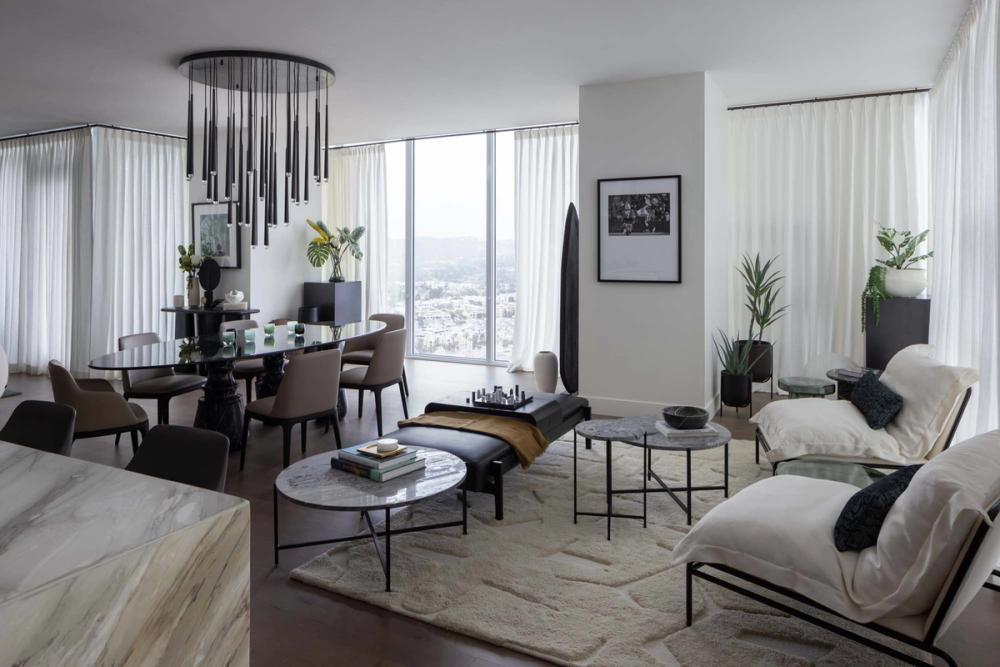
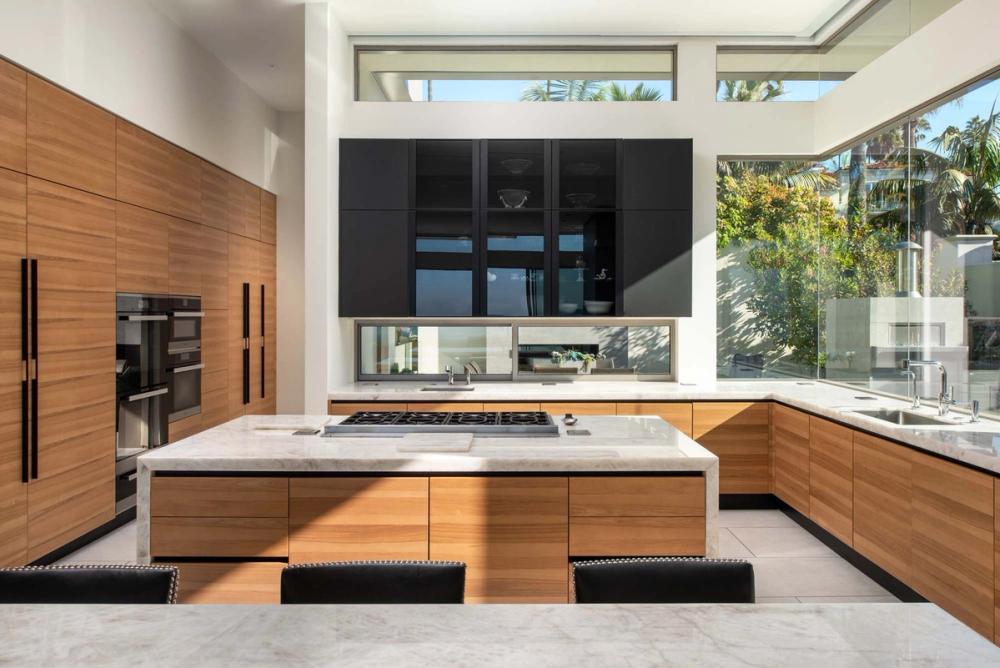
photo credit or project name here
Whichever method a designer uses, the design agreement should spell out three things: the pricing method, what the fee covers, and when you’ll be invoiced.
HOURLY FEES With hourly fees, you pay for the time spent on the services you’ve agreed to. Your agreement should state the hourly rate along with how that time is tracked.
Billable time can include meetings, showroom visits, plan reviews, furniture research, site visits, reviewing build drawings, sample evaluations, and coordination with vendors or contractors.
Hourly billing tends to suit consultations, smaller assignments, advisory work, additional services, or any work that’s hard to estimate in advance.
FIXED OR FLAT FEES A fixed fee is an agreed price for a defined scope of services. The designer reviews the project and estimates the time involved, then confirms the fee before that phase begins.
For a furnishing project, the fee may cover concept development, furniture plans, finish selections, sourcing, and a set number of revisions. For a renovation, it may also include detailed drawings, cabinetry development, or scheduled site meetings.
Anything outside the original scope may be billed as additional services. Adding another room or asking for a new cabinetry package means more work, which usually means more fees. Your agreement should list what the fixed fee covers along with the terms for any extra work.
SQUARE FOOT PRICING Square-foot pricing bases the fee on the size of the area included in the project. It works best when the space itself is a practical way to measure the work.
Your agreement should define exactly what’s being measured. That might be the full indoor living space, selected rooms, or another stated portion of the home.
Keep in mind that two homes with the same square footage can need very different amounts of design work. Custom built-ins, specialty stone, bespoke furniture, detailed fabrication, or an extensive art program can all add considerable design work. The scope of services should make clear what the square-foot rate covers.
PERCENTAGE-BASED FEES With a percentage-based fee, the designer’s fee is a set percentage of what’s spent on the project. That spending might be the construction budget, the furniture budget, or another agreed part of the project.
The agreement needs to say exactly which budget the percentage applies to. The same percentage of a construction budget and of a furniture budget can add up to very different fees.
If that budget grows, the fee grows with it. Expanding the construction budget or adding a large custom furniture package can raise the final fee, depending on the terms of your agreement.

Team meeting or Marcos showing us his old surf photos? Both, actually.
Choosing furniture is just one part of the buying process. Once you approve a piece, the designer may request quotes, confirm specifications, place the orders, track production, coordinate shipping, and handle any issues before installation. Custom pieces can also involve reviewing build drawings, finish samples, or the fabrication itself.
Designers bill for that work in different ways. Under a cost-plus arrangement, you pay what the designer paid for each approved item plus an agreed markup or fee. Other agreements use a separate procurement fee instead. Either way, freight, receiving, storage, delivery, and installation may be billed on top.
If your designer works with a retainer (an upfront payment that fees or purchases are drawn from), the agreement should explain how it’s applied and when it needs to be topped up.
When a designer quotes you a fee, that number covers their work, not the whole project. Construction, furnishings, fabrication, taxes, and related purchasing costs are all paid for separately.
“Interior design budget” can get confusing when all of that is lumped into one number. Keeping the designer’s fee in its own category gives you a clear picture of what the project will really cost, along with what’s left for furniture, lighting, stone, cabinetry, and everything else.
Look Beyond the Number on the ProposalA lower number on a proposal doesn’t always mean a better deal. Two proposals can describe very different amounts of work, so compare what each one includes as closely as the fee itself. One might fold cabinetry drawings, site meetings, purchasing management, or installation supervision into the base fee, while another bills each of those separately.
Look closely at the deliverables, revision policy, site-visit charges, contractor coordination, and purchasing terms. Your agreement should also explain how extra services get approved if the project grows after work begins.
Check the payment schedule too. Fixed fees are often split by project phase, while hourly work is usually invoiced on a regular basis. Purchases may need to be paid for before an order is even placed, since vendors often require a deposit or full payment before production starts.
Before you sign, make sure you understand what the design fee covers, which expenses are billed separately, and how added work will be priced.


At Matrix Design Studio, we talk through scope and budget early, so you know how the project is structured before design work begins. We start by listening to how you use your home, what you want to change, and where you want to invest. Those conversations set the practical parameters for everything that follows.
If you’re planning a custom home or major renovation, start a conversation with our studio about the scope, priorities, and investment you have in mind.