Hurricane-Resistant Homes That Don’t Look Like Bunkers
SEPT 21, 2026
Because you don’t just live in the Caribbean, you live with it :))))
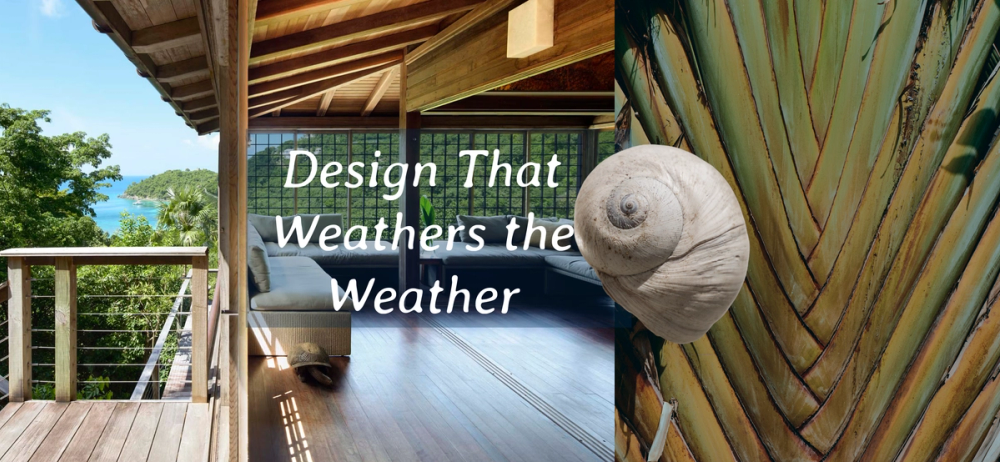
Because you don’t just live in the Caribbean, you live with it :))))
Chances are, if you've decided to build a home in the U.S. Virgin Islands, you understand the appeal of indoor-outdoor living — like a treehouse. Robinson Crusoe all grown up. A close relationship with the outdoors is one of the pleasures of island living, but it also asks a good deal more of the architecture — especially during high winds and heavy rain, with salt air and humidity a year-round constant.
Hurricane resistance isn't a single feature or an optional upgrade you add at the end. It's the sum of where the house sits, how it's built, how well it keeps water out, and how easy it is to button up when a hurricane is looming. When those decisions get made together rather than bolted on one at a time, a home can adapt to serious weather and still maintain that easy, breezy, open-air way of life that drew you to the U.S. Virgin Islands in the first place.
We design all our homes to live in harmony with their natural environment. Which means that before pencil ever hits paper, we study how your site already behaves in conjunction with the elements: what time of year the trade winds strengthen and how the evening breeze comes off the ocean in the afternoon, where water collects in a light afternoon drizzle and where it makes deep washes in a downpour. We model how the sun tracks across a room season to season. By the time we start drawing, the site has already made many of the big decisions for us. That close reading of a place and space is where resilient coastal design actually begins.
SUPPORT WHERE YOU NEED IT – NOT WHERE YOU CAN SEE IT
Most of what makes a hurricane-resistant home work, you will never see. The frame is tied together so the house behaves like one piece instead of a stack of parts. The roof is fastened down to a concrete ring beam rather than set on top. All of it held together with rust-resistant hardware and integrated seamlessly with the finished surfaces, to make your home quietly bulletproof.
Load bearing from both an aesthetic and an engineering perspective, windows and doors carry an especially complex role. They bring daylight into your interior and frame those delicious oceanviews that you’ve been dreaming of. They're also where a storm is most likely to get in — and when it does, wind pressurizes the inside of the house and starts pushing up on the roof from underneath. Which is why a hurricane-rated window is rated as a whole assembly, glass, frame and the wall it sits in. We work with window manufacturers whose windows are rated to 200mph+ wind gusts and when a hurricane passes, we make sure to gather feedback from our friends, neighbors and fellow builders to find out which windows behaved as advertised and which systems failed despite manufacturer assurances. .
We rely on time-tested systems that have survived real storms and we evolve our hurricane strategies after every storm because whatever doesn’t kill you makes you stronger.

photo: Ricky Lesser
WATER, SALT, AND THE LONG VIEWWind arrives with drama, but water reveals the quality of a thing slowly. Heavy rainfall finds the seam that looked waterproof. Roof runoff finds the low spot in the ground. Storm surge tests every threshold in the house. Flashing handles the first — thin metal or membrane layered into every joint where two materials meet, catching water before it can come inside. Grading handles the second: the ground gets sloped so rain runs away from the house instead of toward it. Terraced landscape captures and slows the water so the land can absorb the rain and prevent flooding. A terrace drain looks like a small item on a drawing, but its position decides where water collects, how the finishes around it age, and how quickly you can use the terrace after a downpour.
Then there's salt — a year-round constant of island living. It can corrode fasteners and hinges everywhere… on the metal inside a glazing system, on exterior finishes, on wood, on the cabinetry in your kitchen… and it can do it every day of the year. That changes how we choose materials: appearance still matters, but so does whether a finish can be repaired instead of replaced, and how a surface looks after ten years of sun, salt, and cleaning. It's also where resilience meets our approach to eco luxury — materials that resist humidity and components that can be easily repaired mean less replacement over the life of the home.

photo: Joey Bania

photo: Fanette Guilloud
A storm-ready Caribbean home acts like one without looking like one. Generous openings, comfortable outdoor rooms, a close relationship with the landscape — all the reasons you're building here, and the very things that put the house most at risk when the weather turns.
Consider a roof. In the U.S. Virgin Islands, a roof that overhangs and acts as an awning does most of the work: it holds off the midday sun, keeps rain off patio furniture, and gives you somewhere to eat breakfast outside that doesn't require SPF with your pancakes. But if you were to ask a hurricane, structurally speaking it's also a wing. We place windows and doors to catch the cross-breeze, which is why you can go days without touching the AC — but they're also the way in, and a storm will try them first every time. So we draw all of it twice: once for breakfast, once for hurricanes. Which is why the overhang, the glazing, the hardware, and how it all anchors into the wall get decided at once, together.
That's the structure. Then there's day-to-day life during Caribbean hurricane season — and, trust us, you do not want to spend it hauling furniture in and out and boarding up windows every time the forecast wobbles. That's why we design homes that close up quickly — because a house that can be storm-ready in an hour is the house that you will get storm ready.

photo: Ricky Lesser
Matrix Design Studio’s Virgin Islands Custom Bungalow and Virgin Islands Treehouse Renovation show how these practices and beliefs have come to life In our work in the Caribbean. Both sites analyzed, studied, and noodled on before anything else, structure and openings resolved together, bespoke cabinetry and interiors specified for salt and humidity rather than in spite of them. The houses, the land they sit on, the wind, sun, and rain that occurs amidst it — all treated and designed as one cohesive system.

photo: Ricky Lesser
We won't tell you a house can outlast any storm. What we will say is that designing for Caribbean weather and designing for Caribbean living are the same job, not competing ones. A hurricane-resistant home doesn’t need to cost you the openness and the close relationship with the outdoors that drew you here in the first place. And most of the year, none of it’s on your mind. Just the house open, trade winds moving through, lunch on the terrace — or perhaps a siesta in a well-placed hammock? Treehouse living, like we said, Robinson Crusoe all grown up.