Skip to content

In Conversation With Firm Principal and Architect Nico Wallace

Author: Cheyenne Arnold SEPT 12, 2025

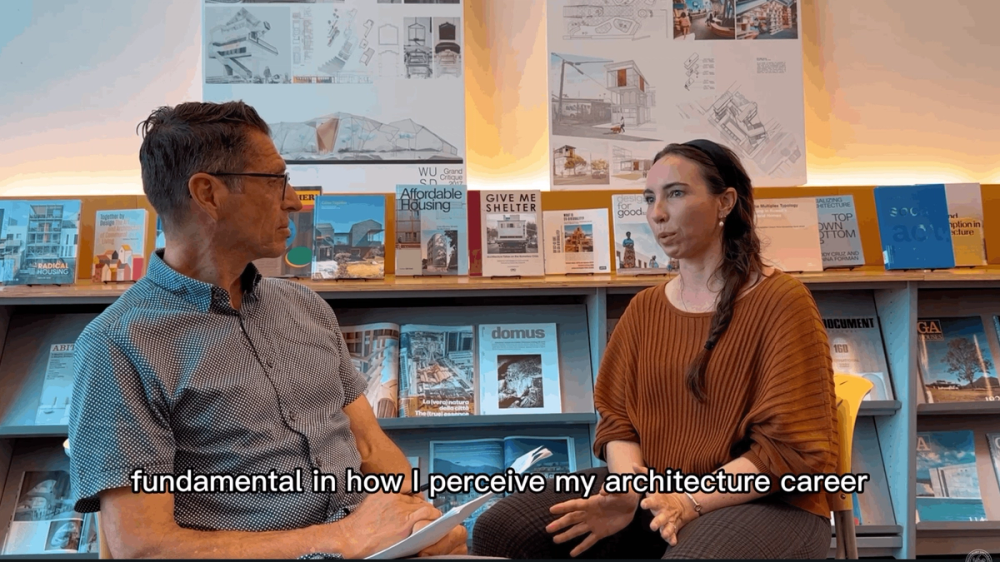
DISPATCH 001: A conversation with Cheyenne Arnold, who sat down with Matrix Design Studio's Firm Principal and Architect, Nico Wallace, to talk inspiration, process, and what drives their work.

Matrix Design Studio

DISPATCH 001: A conversation with Cheyenne Arnold, who sat down with Matrix Design Studio's Firm Principal and Architect, Nico Wallace, to talk inspiration, process, and what drives their work.

WHAT DO YOU THINK MATRIX DESIGN STUDIO DOES BETTER THAN ANYONE ELSE? We listen. We’re very good at hearing what our clients are saying, and we have no problem changing direction mid-project to align with their changing goals. Often clients aren’t always sure what’s truly important to them until they’re partway through the process. We’re great at continuing those exploratory conversations so that as they discover what they really want, we’re right there with them making it happen — and asking the kinds of questions that help them explore what they actually want.

A lot of firms get a task at the very beginning — “we want a five-bedroom house on the Caribbean shore” — and with very little continued input, six months later the client has a design that technically fits the request but doesn’t serve their life. Maybe what they really needed was six bedrooms split into two-bedroom suites so adult children can stay with their families. We prevent those misalignments by keeping the conversation open all the way through.

WHEN CLIENTS TALK ABOUT WORKING WITH YOU, WHAT MAKES YOU PROUD? They really enjoy working with us. Our clients leave happy and often say we feel like family or good friends. I love that — not only did we bring them across the finish line with a project they’re proud of, but there was trust throughout and strong professional relationships the whole way.

ARE THERE PARTICULAR MATERIALS, DETAILS, OR DESIGN SIGNATURES YOU’RE KNOWN FOR? Absolutely. We do a lot of custom cabinetry and we use really special, sustainable materials you won’t see in spec or flip homes. Our projects don’t look like anything else because the materials have stories — and we tell those stories so clients can inhabit their house knowing what surrounds them.

Often the palette continues a story the client is already telling us. If we have a client deeply connected to Hawaii, instead of building a tiki palace, we’ll layer traditional Hawaiian materials — sustainably harvested Koa from windfall trees, custom bleached Koa cabinetry, lava rock pavers for outdoor showers — elements that evoke Hawaii without feeling like a theme park.

Another client was color-blind but connected to glacial aqua blues; that tone became a meaningful accent because it actually registered for them. We also obsess over details: how a wall meets drywall, how the sink lays into the counter, how the floor meets the wall. They seem tiny, but if any one of them is wrong, your eye snags and the project feels cheap; done well, they elevate everything.

HOW WOULD YOU DESCRIBE YOUR STYLE? In our natural element, we gravitate to warm contemporary or cozy modern. We believe in spaces that embrace indoor-outdoor living and accommodate human life really well. Our houses aren’t cold sculptures to be admired; they’re foundations for daily life — where you drink your morning coffee or help your kids with homework.

Matrix Design Studio

What influences you most when you start a new project?

The conversation with the client is the keystone. Second to that are the ambient conditions of the site — light, slope, exposure, proximity to neighbors. But the jump-off point is always: what is the client telling us matters?

HOW DO CALIFORNIA AND THE CARIBBEAN CONTINUE TO SHAPE YOUR APPROACH? Both cultures embrace indoor-outdoor living. In the Caribbean, projects must make use of sustainable technologies because it’s an island: no fresh water, imported electricity, localized waste management — so solar, rainwater collection, and anaerobic sewage treatment are baked in. We’ve brought that toolkit back to San Diego to make difficult sites more resilient, sustainable, and easier to maintain. Both places also face extreme conditions — hurricane-force winds, seismic activity, drought — so resilience matters. We think carefully about how damage might occur so it’s easy to maintain and protect. And we’ve thought through many systems to make it easy to close up a house when a hurricane is coming, because often you only have a day’s notice. That’s not much time to add plywood to every glazing panel, run dishes, haul all the lawn furniture inside — it’s a huge amount of work, which is why people don’t always do it in time. In a single season you might see 15 hurricanes; if you treated each one at full tilt you’d be constantly moving your house in and out of itself. I really believe if a house can be shut up in one hour, people will do it every time. So we make our systems very user-friendly, intuitive, and easy to access. Designing for seismic zones in San Diego overlaps with hurricane engineering in the Virgin Islands — both demand foresight, strong detailing, and respect for natural forces — which is why our work focuses on resilience, efficiency, and longevity.

WHAT GUIDING PRINCIPLES DEFINE YOUR PHILOSOPHY? We believe in human-centered design, and we do both architecture and interiors as one holistic process. We zoom out to form, massing, and the envelope, then zoom in to how the spaces actually work for living — and we keep moving back and forth so neither drives blindly. It’s not the traditional handoff where an architect designs a shell and an interior designer has to shoehorn life into it. We’ll ask: if that drain goes there, does it kill a window on the façade? If a window wants to be there, does it land in a bathroom? We treat the building like pliable clay shaped by inside and out at the same time so it’s beautiful from the street as well as effortless to live in.

Matrix Design Studio

Architecture can be like that. We do the million decisions — tiles, openings, systems — but we keep our eye on the real product: a place that lets you arrive at the finish line composed, happy, and ready to enjoy life. The house should feel like a scaffold for the life you want, not a hindrance — the space that invites morning coffee, homework with your kids, and easy everyday rituals.

WHO OR WHAT INSPIRES YOU OUTSIDE OF ARCHITECTURE? Kengo Kuma — the way he plays with forms and materials feels childlike and refreshing. Musically I’m all over the place: Radiohead, M.I.A., lots of different artists.

HOW DO YOU BALANCE CREATIVITY WITH BUDGETS, CODES, AND TIMELINES? Everyone, no matter the budget, wants value for their dollars and things that last. Bad design often costs more than good design. It takes me the same amount of time to design a bathroom badly as it does to really listen and make it good. Cost sensitivity doesn’t mean downgrading quality; it means intentionality. We align budgets with what actually brings that client joy and longevity. Some clients love a top-of-the-line, app-controlled HVAC; others hate air conditioning and never use it. We won’t spend $100k on something that gives them no value. We show options with real implications — price, lead time, warranty, maintenance — so they can spend a little more today to avoid spending 2x tomorrow.

Fred Gemmell and Nico Wallace

WHAT’S YOUR BACKGROUND, AND HOW DID YOU COME TO LEAD THE STUDIO? Matrix was founded by my parents in 2001, so I grew up in the office — models on the tables, trace paper everywhere. I actually thought I was going to be a diplomat. I went to Georgetown for foreign service because I loved languages and the way conversation can solve problems. I studied French, Spanish, and Italian, and has always been fascinated by how language shapes culture and perspective.

Then I spent about a year in the Caribbean teaching scuba diving, and that totally reframed things. I realized I didn’t want to work at the scale of governments — I wanted to use those same skills of listening, reading people, and finding common ground in a more personal, immediate way. I came back to San Diego, started working in the firm, and found that I loved the problem-solving — clients, contractors, materials, budgets.

From there I got my Master of Architecture at Woodbury, became licensed, and in 2021 I bought the business from my parents — three days before giving birth to my second child. Since then I’ve also taught studio courses at Woodbury, NewSchool of Architecture & Design, and the University of San Diego while leading the firm.

WAS THERE A TURNING POINT WHEN YOU KNEW IT WAS TIME TO TAKE THE REINS? By the time my parents sold me the business I had run a number of projects start to finish and felt ready. They still consult and I ask them questions all the time — their design sense and business acumen are invaluable. My dad’s reputation in San Diego is huge; he’s obsessively material-driven — the guy who loads granite boulders into his car because the quarry stone wasn’t interesting enough. For him it was always about product and artistry. For me it’s about the conversation with the client and how the house supports a lifestyle — human behavior inside the home.

HOW WOULD YOU DESCRIBE YOUR ROLE TODAY? We have an Arthurian roundtable approach. There are five of us and we collaborate on every project. No one sits above or below; egos stay at the door. We also bring that egalitarian mindset to job sites — we treat contractors and subs with respect and invite their expertise, which is why we’re highly recommended by builders. Many of our clients hear about us from contractors who like working with us — which isn’t common in our industry.

WHY DOES MDS HAVE A REPUTATION FOR MAKING THE PROCESS EASIER? We talk to people. I pick up the phone. I’ll send design intent to a cabinetmaker, then call and ask: is any of this overly complex? Do you have a smarter detail? Builders and fabricators are motivated by doing it beautifully — giving them space to advise makes the work better. The opposite — handing off drawings and saying “make it happen” — leads to bad solutions and friction. Communication reduces mistakes, saves time, and results in better projects.

WHAT’S THE FIRST QUESTION YOU ASK NEW CLIENTS? The triangle: budget, timeline, quality. All three are valid, but you can’t have all three at once. I ask which one they can let go of. It helps turn an impossible problem into a solvable one. People often start with “budget and timeline,” but when we show options — most people value longevity and low maintenance. We keep tying dollars to real value.
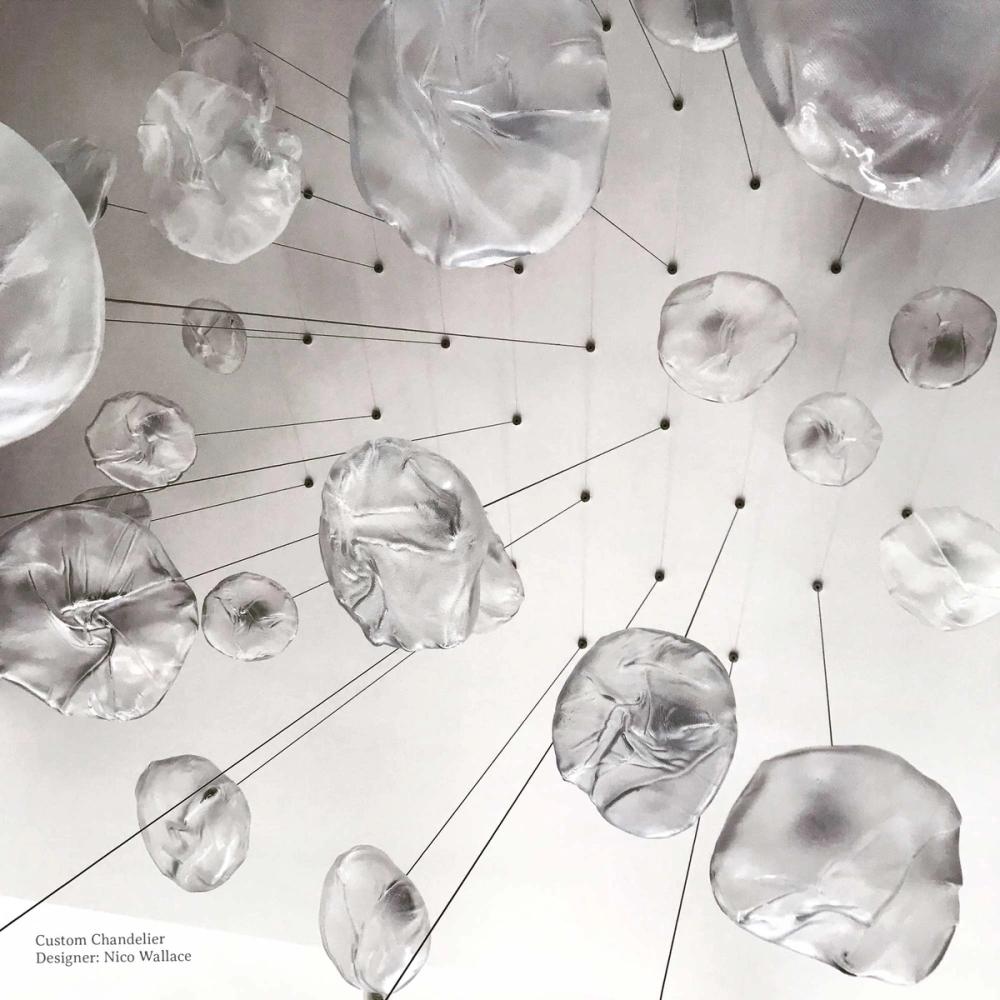
CUSTOM CHANDELIER

HOW DO YOU BALANCE BEING THE EXPERTS WITH MAKING CLIENTS FEEL HEARD? We present as partners. We’re honest when something won’t last, will date quickly, or blows the budget for no reason. We channel their excitement into the most effective place — maybe that’s bringing them to veneer shops or traveling to pick stones if they love materials; or, if they’re busy, we handle it and keep them informed. We use detailed questionnaires and a lot of active listening. Personal dynamics come up — like a parent wanting to reconnect with their teenager — and we’ll design for it (smaller bedroom, a more public study space; or even invite their teenager into the decision making progress). We help clients tell a story they might not realize they’re telling.

HOW DO YOU DEFINE SUCCESS? A few months after move-in when a client texts, “This house makes me so happy.” Good design feels like a weight off your heart: the house invites healthier habits, small pleasures, and everyday moments worth noticing. We frame views so you catch that one tree in that one light as you pass and the house becomes a lens for noticing your life.

WHAT’S ONE THING YOU WANT EVERY POTENTIAL CLIENT TO KNOW BEFORE HIRING YOU? Choose your team wisely — it’s the most important decision. Building a home is a million decisions; it’s not supposed to be easy, but with the right partner it can be stimulating and fun. Our solution mindset turns a hard process into a journey you can be proud of so it becomes less of a nightmare and more akin to “we climbed Everest, isn’t that cool?”

Building In Both: Where Seas Meet Fault Lines All The Long Way Home: Modernism and Machinery